
Water Leak Sensors That Work With Your iPhone – What I Actually Use in 2026
Hey folks, it’s your friendly neighborhood tech from Pure Home Services here. I wanted to talk to you about something that honestly saves my customers thousands of dollars every year – water leak sensors that connect to your iPhone.
I’ve been doing water damage restoration in Montgomery County, Anne Arundel, and Howard County for years now, and I can’t tell you how many times I’ve shown up to a house where a small leak under the kitchen sink has been dripping for weeks. The homeowner had no idea until their hardwood floors started buckling or they saw mold growing behind the cabinet. By then, we’re talking about a $15,000+ restoration job instead of a quick plumbing fix.
That’s why I started installing these smart leak sensors for my clients after we finish their water damage jobs. Nobody wants to go through that nightmare twice.
Why I Recommend the iPhone-Compatible Ones
When these sensors connect through Apple’s HomeKit system, your phone gets pinged immediately when water hits the sensor. And I mean immediately. Even if you’ve got Do Not Disturb turned on because you’re sleeping or in a meeting, these alerts will break through.
I had a customer last month who was at work when her washing machine hose burst. The sensor caught it within seconds, she got the alert, and she called her neighbor to shut off the water main. What could’ve been a $20,000 disaster turned into a $500 plumber visit. That’s the difference we’re talking about.
The other nice thing is you can buy different brands and they all work together in the same app. Mix and match based on what fits where.
The Ones I Actually Install
I keep four different models in my van because honestly, every situation needs something different. Let me break down when I use each one.
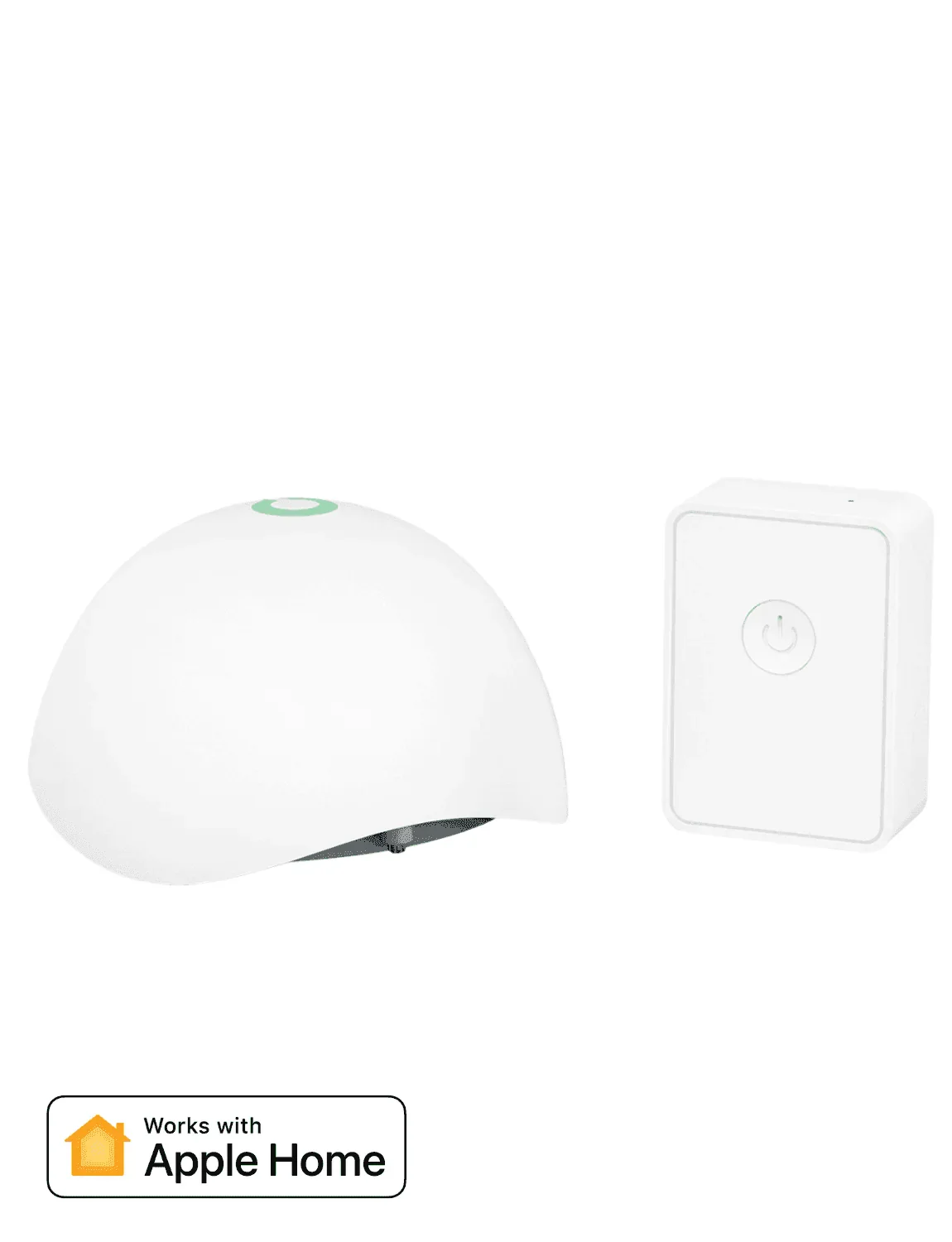
Meross Smart Water Sensor
This is my go-to for most residential installs. I probably put in 30 of these last year alone. They’re these little hockey puck things with three metal prongs on the bottom that detect moisture.
Just installed a set of four at a townhouse in Rockville last Tuesday – one under each bathroom sink, one under the kitchen sink, and one by the water heater. Total cost for the customer was pretty reasonable, especially compared to what water damage would run them.
The battery life is legit – I’ve got customers still running on the original batteries from 2024. They do need a little hub that plugs into your router, but it comes with the first sensor you buy.
When do I recommend these? Honestly, for most homeowners who just want basic coverage everywhere. If you’ve got 3-4 spots you’re worried about (all your sinks, maybe the laundry area), this is your best bet without spending a fortune. I tell my clients to think of it like smoke detectors – you want one in every risky spot.
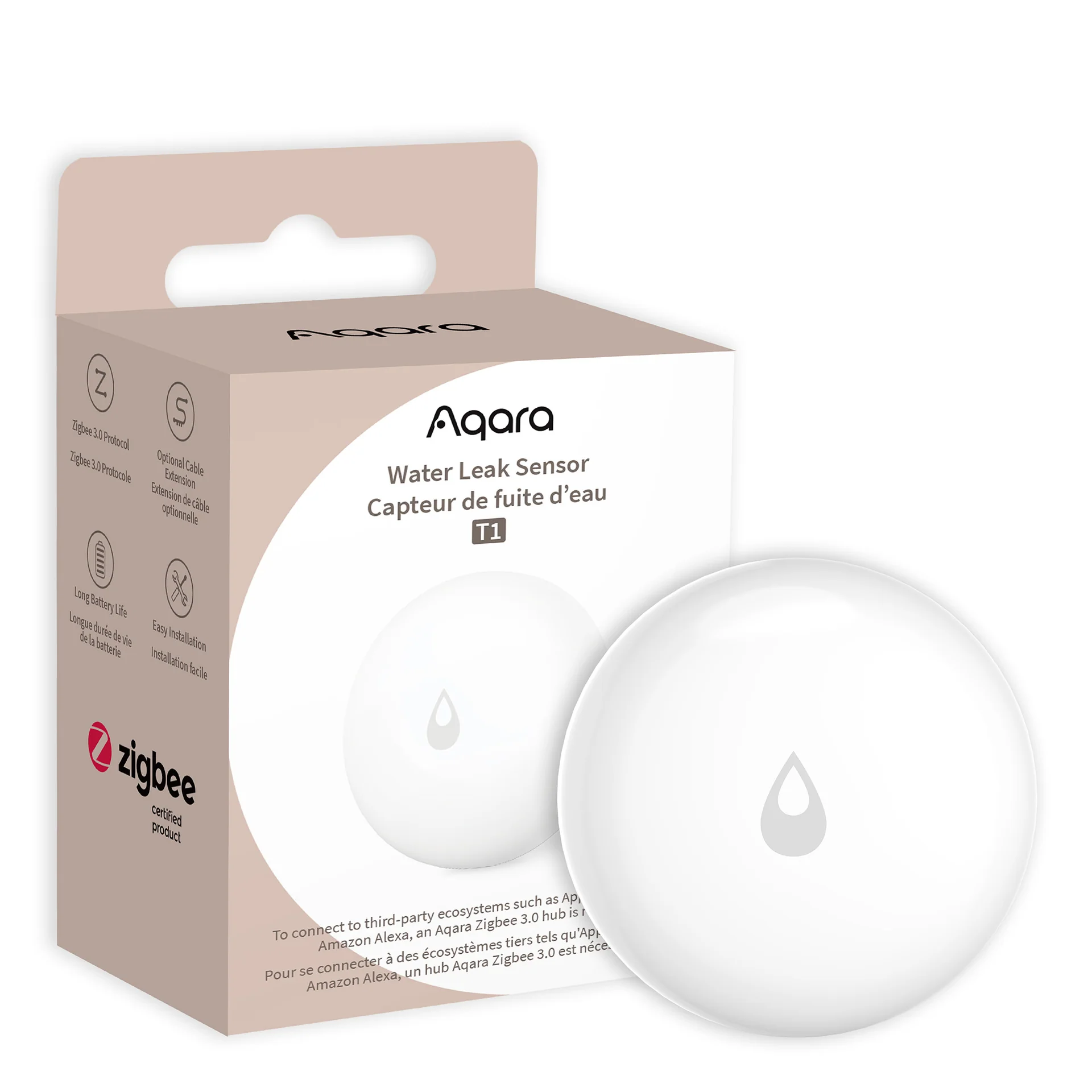
Aqara Water Leak Sensor T1
These things are tiny. Like, smaller than an Oreo cookie tiny. I use these for the weird tight spots where the Meross won’t fit.
I’ve got a customer in Ellicott City with a dishwasher that kept having slow leaks in the back corner. The space between the dishwasher and the wall was maybe 2 inches. The Aqara slid right in there, no problem. Two weeks later, it caught another leak starting and saved her entire kitchen floor.
They run on those round watch batteries (CR2032) and supposedly last two years. The ones I installed in 2024 are still going strong. They’re also waterproof (IP67 rated), which is good because, well, they’re literally sitting in water when they go off.
Downside is you need an Aqara hub to make them work with your iPhone. So if you’re starting from scratch, the Meross might make more sense cost-wise. But if you want the absolute smallest sensor that can squeeze anywhere, this is it.
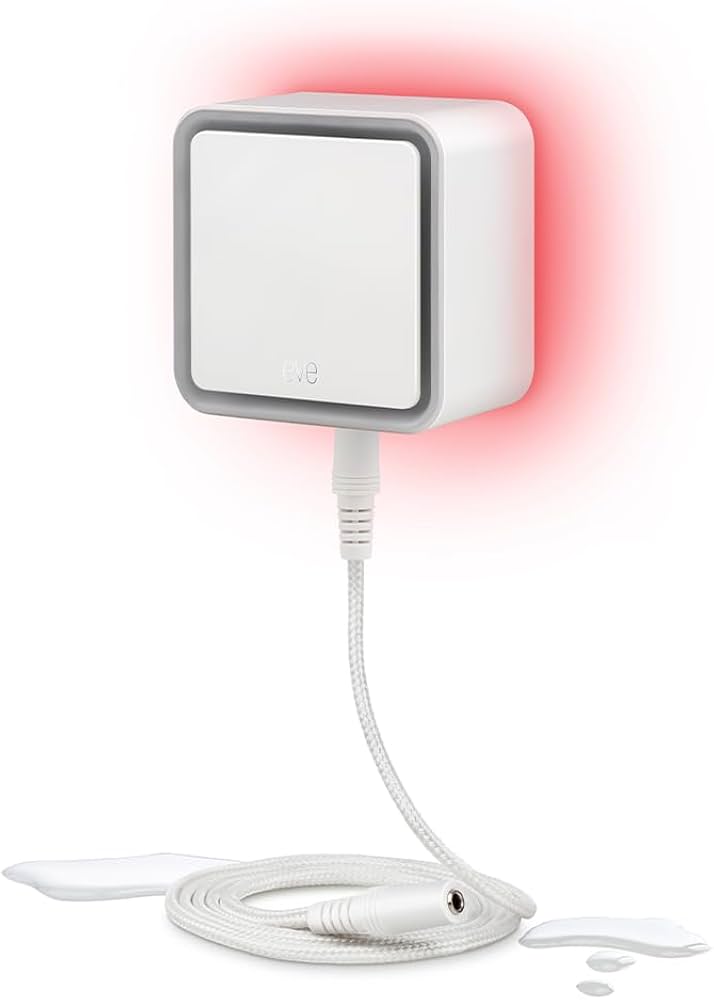
Eve Water Guard
Okay, this one’s different and honestly pretty cool for specific situations. Instead of a little puck, you get this 6-and-a-half-foot cable that’s the actual sensor. The whole cable detects water, not just one spot.
I installed one of these in Columbia last month for a customer with a big water heater in their basement. We wrapped the cable all the way around the base of the heater. Now, if it leaks from any side, any direction – boom, she gets notified.
That’s the advantage over the puck sensors – with those, the water has to flow exactly to where you set it down. With the Eve, it’s like casting a net. Way better coverage for big appliances or your whole laundry room floor.
The other nice feature is it plugs into the wall, so no batteries to swap out ever. It’s also got a loud 100dB alarm built in, which is great for older folks who might not always have their phone nearby.
Downside? It’s pricier than the others, and you need an outlet nearby. Under most sinks, you don’t have an outlet, so it doesn’t work there. But for water heaters, washing machines, or anywhere you’ve got power? Solid choice.
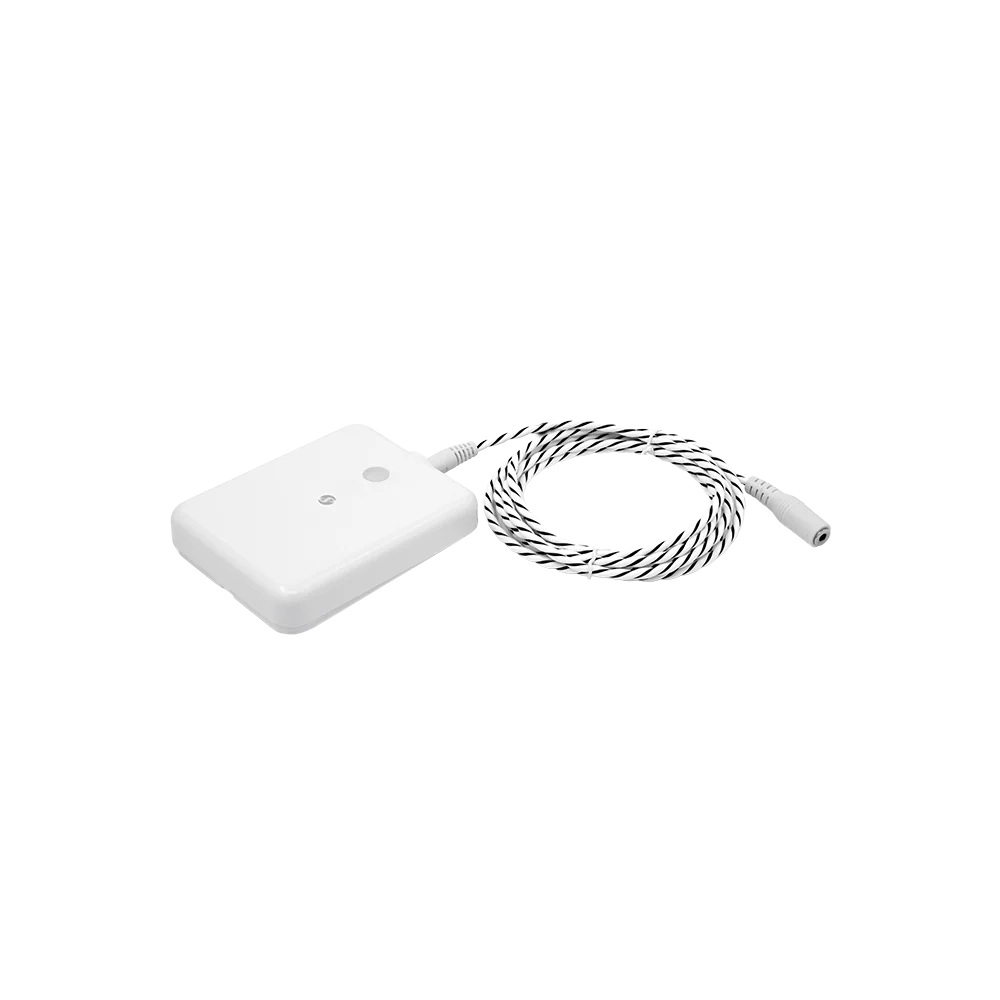
Shelly Flood Gen4
This is the newest one I’ve started carrying. Just got my first shipment last month and I’ve done maybe five installs so far.
Similar concept to the Eve – it’s got a 6-foot sensing cable instead of just a contact point. But this one runs on regular AA batteries and they’re supposed to last two years. I installed one in Bethesda three weeks ago around a customer’s sump pump, and so far so good.
What I like about the Shelly is it’s easier to set up than the older models. It connects straight to your iPhone without needing a separate hub or bridge. Just scan it and you’re done. Takes me like 3 minutes.
It’s got different alarm settings you can customize, which is nice. I’m still learning all the features on this one, but for places like basements or vacation homes where you want that cable coverage but don’t have an outlet for the Eve? This seems like a winner.
Bottom Line From a Guy Who Sees This Stuff Daily
If I could only tell you to do one smart home thing, it would be getting leak sensors set up. I’ve seen too many beautiful homes in Potomac and Annapolis get wrecked by slow leaks that nobody caught in time.
The cleanup and restoration we have to do gets expensive fast. Ripped out floors, mold remediation, new cabinets – it adds up quick. A couple hundred bucks in sensors versus a $25,000 insurance claim? Easy math.
When I show up for a water damage call and the customer tells me “I wish I had known sooner,” that’s the worst part. Because they could have. These sensors would’ve told them the second water showed up.
Get them installed under your sinks, by your water heater, near your washing machine – anywhere water could cause problems. Your iPhone will let you know immediately if something’s wrong, even if you’re at work or asleep or out of town.
Stay dry out there, Your Pure Home Services Team